
PHP: Extracting characters from a string
Sometimes you need to get a single character from a string. For example, if a website knows the user's first name and last name and needs to display them in a shortened format like A. Ivanov. To do this, you'll need to take the first letter of the name.
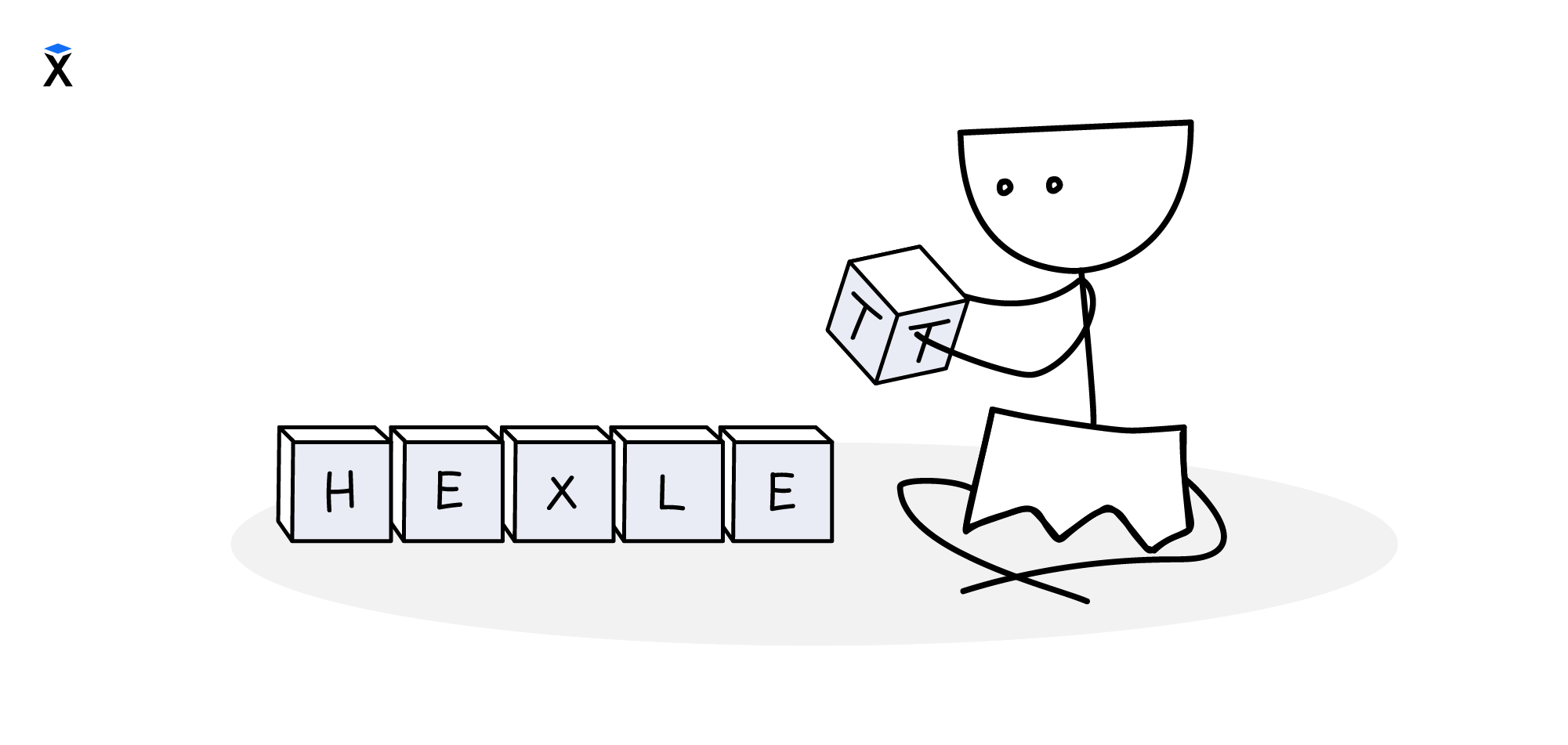
In PHP, indexing is used to access characters of a string. Indexing means that each character in a string has its own number, that is, an index. Indexing starts from zero: the first character has index 0, the second has 1, and so on. Let's imagine we have a string:
<?php

$firstName = 'Alexander';To get the first letter, we specify its position (index) in square brackets:
<?php

print_r($firstName[0]); // => ASquare brackets with an index inside are a special operator for extracting a character from a string. Indexes in PHP (and in many languages) start from zero:
Character	A	l	e	x	a	n	d	e	r
Index 0 1 2 3 4 5 6 7 8The length of the string Alexander is 9, so the index of the last character is 8, that is, 9 - 1.
To get the last character, for example, you can write:
<?php

print_r($firstName[8]); // => rIf the length of the string changes, the last element will shift too, and you'll have to specify the new index where this character is located.
And if you go beyond the bounds of the string, PHP will report a problem:
<?php

print_r($firstName[9]);

// Warning: Uninitialized string offset 9That's why in programming it's customary to check the length of a string and access its characters only when it's safe. We'll get to that in future lessons.
Shortened extraction from the end
To get elements from the end, it's better to use negative indexes. In that case, counting starts from the end.
<?php

$firstName = 'Alexander';

print_r($firstName[-1]); // => r, the last character
print_r($firstName[-2]); // => e, the second-to-last characterString: 'H' 'e' 'x' 'l' 'e' 't'
Index: 0 1 2 3 4 5
From end:-6 -5 -4 -3 -2 -1Negative indexes work like this:
- -1 corresponds to the last character
- -2 corresponds to the second-to-last
- and so on
This is convenient and safe, because it works correctly even if the string changes its length.
An index can be stored in a variable:
<?php

$firstName = 'Alexander';
$index = 0;

print_r($firstName[$index]); // => AThis approach is useful when the index is computed somewhere in the code and then used to access the needed character.
Special characters
When indexing, ordinary letters, signs, and special characters are all taken into account. They all occupy a position in the string and have their own index, even if they "aren't visible" on the screen.
For example, in the string "\nyou" the first character is \n (a line break), and the letter y already comes at index 1. So accessing $magic[1] will return exactly y. Note the double quotes: in single quotes \n would remain two separate characters — a backslash and the letter n.
Think about it: what will this code print?
<?php

$magic = "\nyou";
print_r($magic[1]); // => ?The output will be:
yInstructions
A secret word is hidden in the $text variable. Extract the needed characters from the variable by their indexes, join them together, and print the word grip on the screen.
If you've reached a deadlock it's time to ask your question in the «Discussions». How ask a question correctly:
- Be sure to attach the test output, without it it's almost impossible to figure out what went wrong, even if you show your code. It's complicated for developers to execute code in their heads, but having a mistake before their eyes most probably will be helpful.
PHP: Extracting characters from a string
Sometimes you need to get a single character from a string. For example, if a website knows the user's first name and last name and needs to display them in a shortened format like A. Ivanov. To do this, you'll need to take the first letter of the name.
In PHP, indexing is used to access characters of a string. Indexing means that each character in a string has its own number, that is, an index. Indexing starts from zero: the first character has index 0, the second has 1, and so on. Let's imagine we have a string:
<?php

$firstName = 'Alexander';To get the first letter, we specify its position (index) in square brackets:
<?php

print_r($firstName[0]); // => ASquare brackets with an index inside are a special operator for extracting a character from a string. Indexes in PHP (and in many languages) start from zero:
Character	A	l	e	x	a	n	d	e	r
Index 0 1 2 3 4 5 6 7 8The length of the string Alexander is 9, so the index of the last character is 8, that is, 9 - 1.
To get the last character, for example, you can write:
<?php

print_r($firstName[8]); // => rIf the length of the string changes, the last element will shift too, and you'll have to specify the new index where this character is located.
And if you go beyond the bounds of the string, PHP will report a problem:
<?php

print_r($firstName[9]);

// Warning: Uninitialized string offset 9That's why in programming it's customary to check the length of a string and access its characters only when it's safe. We'll get to that in future lessons.
Shortened extraction from the end
To get elements from the end, it's better to use negative indexes. In that case, counting starts from the end.
<?php

$firstName = 'Alexander';

print_r($firstName[-1]); // => r, the last character
print_r($firstName[-2]); // => e, the second-to-last characterString: 'H' 'e' 'x' 'l' 'e' 't'
Index: 0 1 2 3 4 5
From end:-6 -5 -4 -3 -2 -1Negative indexes work like this:
- -1 corresponds to the last character
- -2 corresponds to the second-to-last
- and so on
This is convenient and safe, because it works correctly even if the string changes its length.
An index can be stored in a variable:
<?php

$firstName = 'Alexander';
$index = 0;

print_r($firstName[$index]); // => AThis approach is useful when the index is computed somewhere in the code and then used to access the needed character.
Special characters
When indexing, ordinary letters, signs, and special characters are all taken into account. They all occupy a position in the string and have their own index, even if they "aren't visible" on the screen.
For example, in the string "\nyou" the first character is \n (a line break), and the letter y already comes at index 1. So accessing $magic[1] will return exactly y. Note the double quotes: in single quotes \n would remain two separate characters — a backslash and the letter n.
Think about it: what will this code print?
<?php

$magic = "\nyou";
print_r($magic[1]); // => ?The output will be:
yInstructions
A secret word is hidden in the $text variable. Extract the needed characters from the variable by their indexes, join them together, and print the word grip on the screen.
If you've reached a deadlock it's time to ask your question in the «Discussions». How ask a question correctly:
- Be sure to attach the test output, without it it's almost impossible to figure out what went wrong, even if you show your code. It's complicated for developers to execute code in their heads, but having a mistake before their eyes most probably will be helpful.
Your exercise will be checked with these tests:
<?php

namespace HexletBasics\AdvancedStrings\Symbols;

use HexletBasics\Exercise\TestCase;

class SolutionTest extends TestCase
{
    public function test()
    {
        $expected = 'grip';
        $this->assertOutput($expected);
    }
}Teacher's solution will be available in:
20:00
